
Garage Floor Guide
Epoxy vs. Polyaspartic Garage Floors: What’s Best for South Florida?
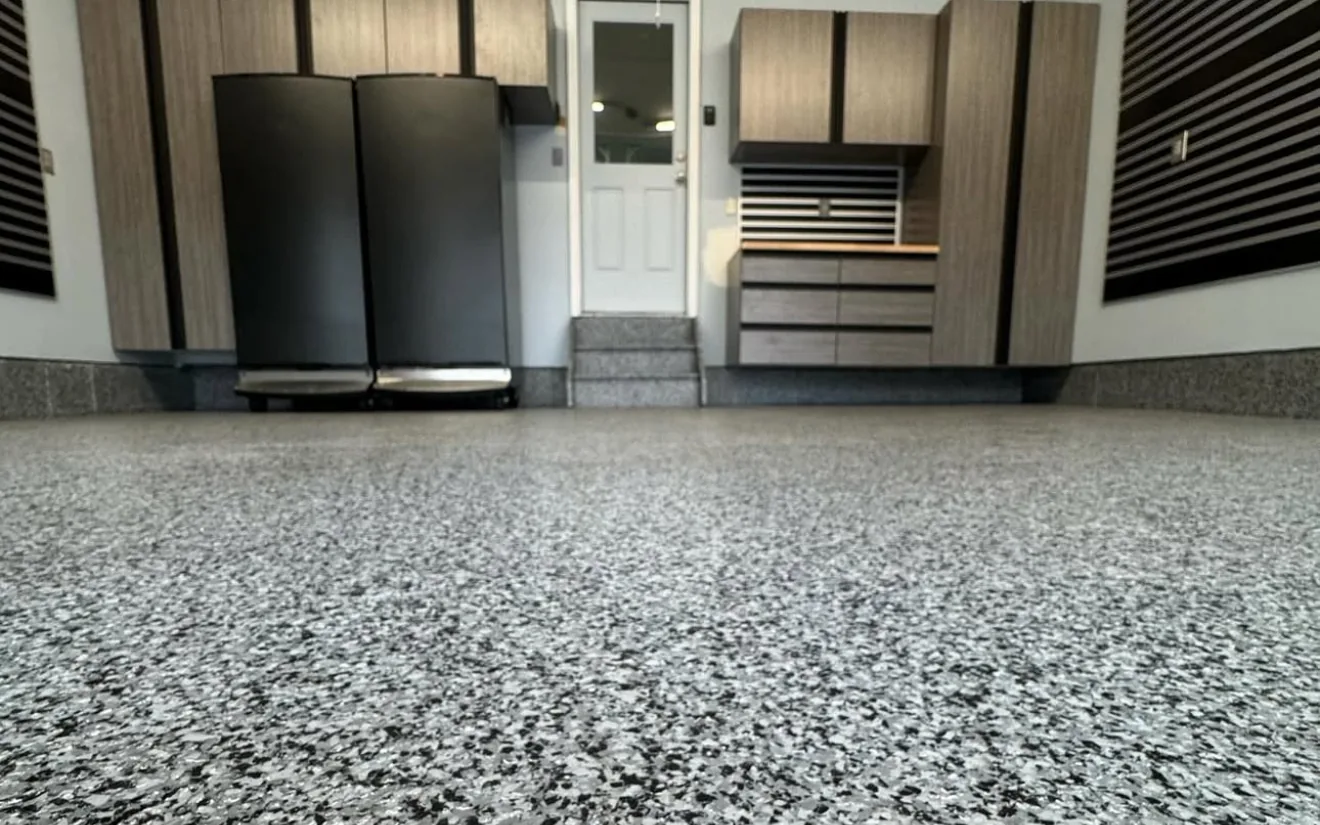
If you’re considering a new garage floor coating in South Florida, you’ve probably come across two popular options: epoxy and polyaspartic.
Both can create a durable, attractive full-flake garage floor, but they aren’t identical. Florida’s heat, humidity, strong sunlight and everyday garage use make the choice of coating system especially important.
At Epoxy Dog, we install professional epoxy and polyaspartic concrete coating systems for homeowners throughout Boca Raton, Parkland, Coral Springs, Coconut Creek, Delray Beach and surrounding South Florida communities. Here’s what homeowners should know before choosing a system.
What Is an Epoxy Garage Floor?
Epoxy is a resin-based coating commonly used as a base layer over properly prepared concrete. It bonds to the slab and creates the foundation that the rest of the floor is built on.
A professional garage floor system is very different from a basic DIY epoxy kit. Before coating the floor, the concrete should be mechanically prepared so the coating can properly bond to the surface.
At Epoxy Dog, our Standard Full-Flake System uses an epoxy base with a polyaspartic topcoat. That combination gives homeowners the advantages of an epoxy base while protecting the finished surface with a durable polyaspartic topcoat.
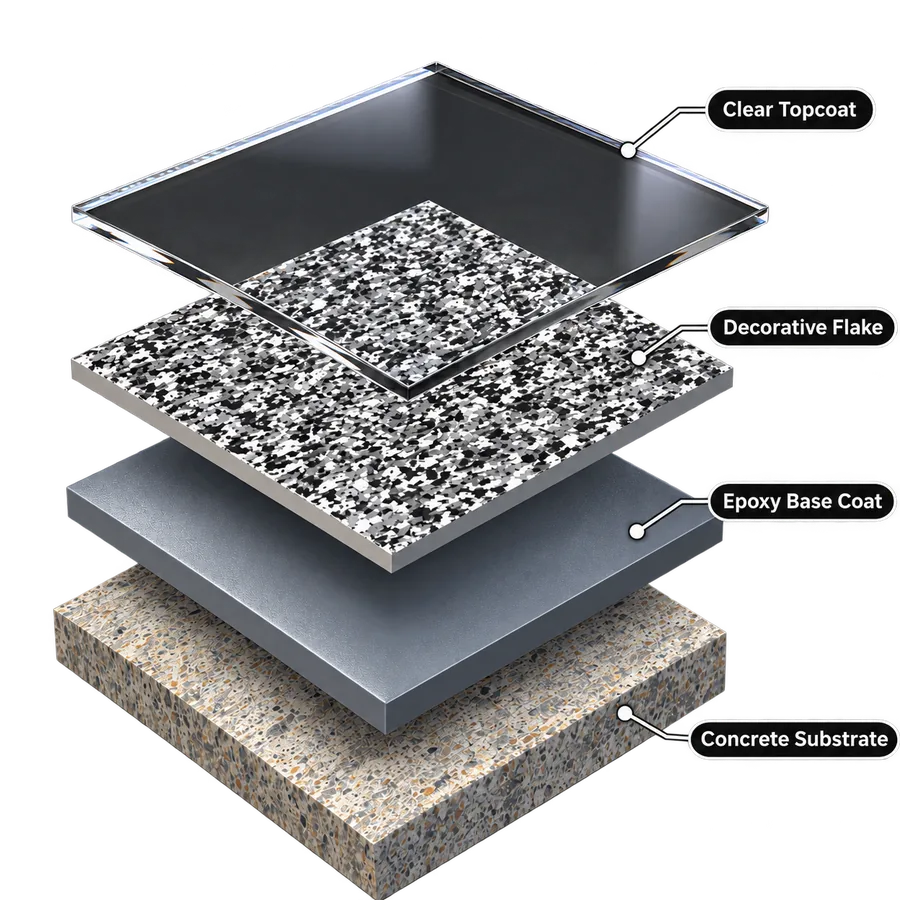
Standard Full-Flake System
- 4Polyaspartic topcoat
- 3Full broadcast decorative flakes
- 2Epoxy base coat
- 1Professionally prepared concrete
Listed top to bottom, the way the layers sit on your slab.
What Is a Polyaspartic Garage Floor?
Polyaspartic is another type of protective concrete coating. It is commonly selected when homeowners want a premium system with excellent durability and stronger resistance to sunlight and outdoor exposure.
Our Premium Full-Flake System uses polyaspartic for both the base coat and the topcoat, and adds a moisture barrier over the prepared concrete.
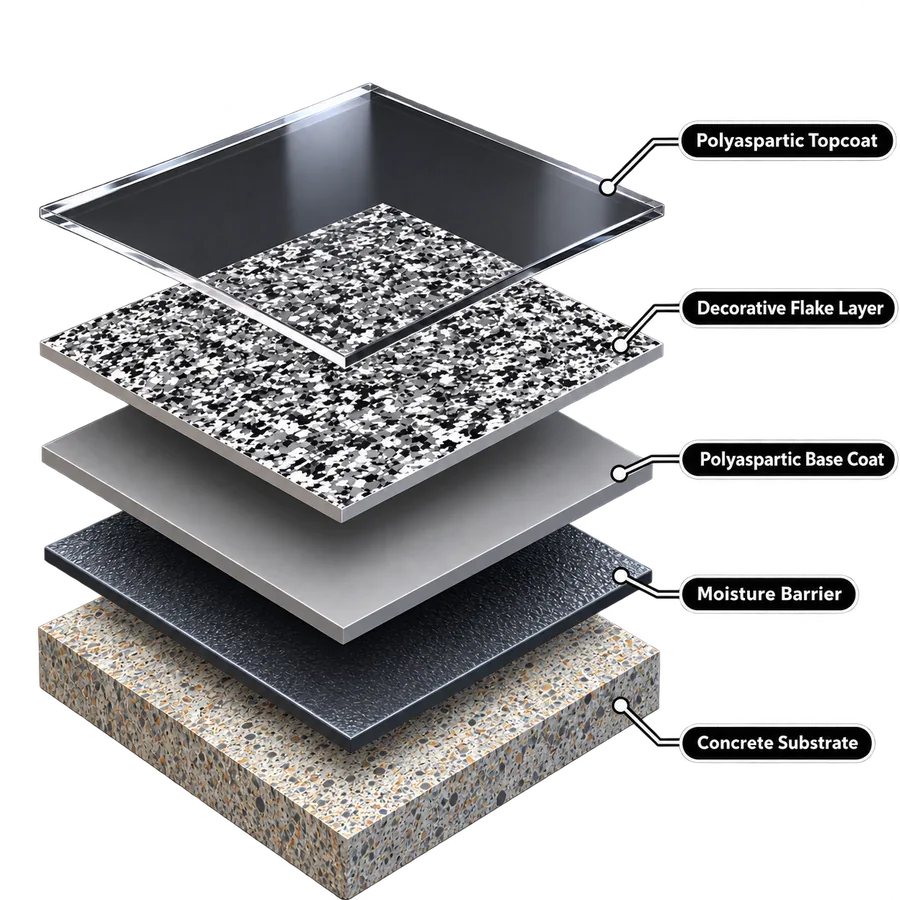
Premium Full-Flake System
- 5Premium polyaspartic topcoat
- 4Full broadcast decorative flakes
- 3Polyaspartic base coat
- 2Moisture barrier
- 1Professionally prepared concrete
Listed top to bottom, the way the layers sit on your slab.
For garages with strong sunlight exposure, or areas such as driveways, patios and pool decks, a polyaspartic system can be particularly attractive.
Epoxy vs. Polyaspartic: What’s the Difference?
Here is how our two full-flake systems compare. Keep in mind that the right system always depends on the application, the condition of the concrete, sun exposure and the quality of the preparation.
| Category | StandardEpoxy base + polyaspartic topcoat | PremiumFull polyaspartic system |
|---|---|---|
| UV resistance | Good. The polyaspartic topcoat protects the epoxy base underneath. | Enhanced. Polyaspartic base and premium topcoat for sun-exposed surfaces. |
| Durability | Durable finish for everyday residential garage use. | Higher durability for demanding or exposed areas. |
| Typical application | Recommended primarily for interior garages. | Garages, patios, pool decks, driveways and commercial areas. |
| Installation | Typically a 1–2 day installation. | Typically a 1-day installation thanks to its fast cure. |
| Warranty | 15-year warranty. | Lifetime warranty. |
| Value | The more economical option. | Higher investment for upgraded performance. |
| Best use cases | Garages with limited direct sun where homeowners want appearance, durability and value. | Sunny garages, outdoor concrete and homeowners who want the premium system. |
1. UV Resistance
South Florida receives intense sunlight throughout the year. Polyaspartic coatings generally offer stronger resistance to UV exposure, making them particularly suitable for areas exposed to direct sunlight.
This is one reason we often recommend polyaspartic systems for:
- Driveways
- Pool decks
- Patios
- Garages with significant direct sunlight
For an interior garage, an epoxy base combined with a polyaspartic topcoat can also provide an excellent balance of performance and value.
2. Durability
Both professionally installed systems can provide a durable surface. But the coating material is only part of the equation. A garage floor can fail prematurely when important preparation steps are skipped, including:
- Diamond grinding
- Concrete repairs
- Proper cleaning and preparation
- Correct coating application
- Full flake broadcast
- Proper topcoat coverage
“A premium coating installed over poorly prepared concrete is still a poorly installed floor.”
That’s why surface preparation is one of the most important parts of every Epoxy Dog installation. You can see every step in our 9-step concrete coating process, and what a professional garage floor installation includes from grinding to final inspection.
3. Appearance
Both systems can create the popular full-flake garage floor finish. Decorative flakes provide color variation and texture while helping transform plain or stained concrete into a cleaner, more finished-looking surface.
Homeowners can choose from different flake combinations to complement their garage, home exterior or personal style.
4. Cleaning and Maintenance
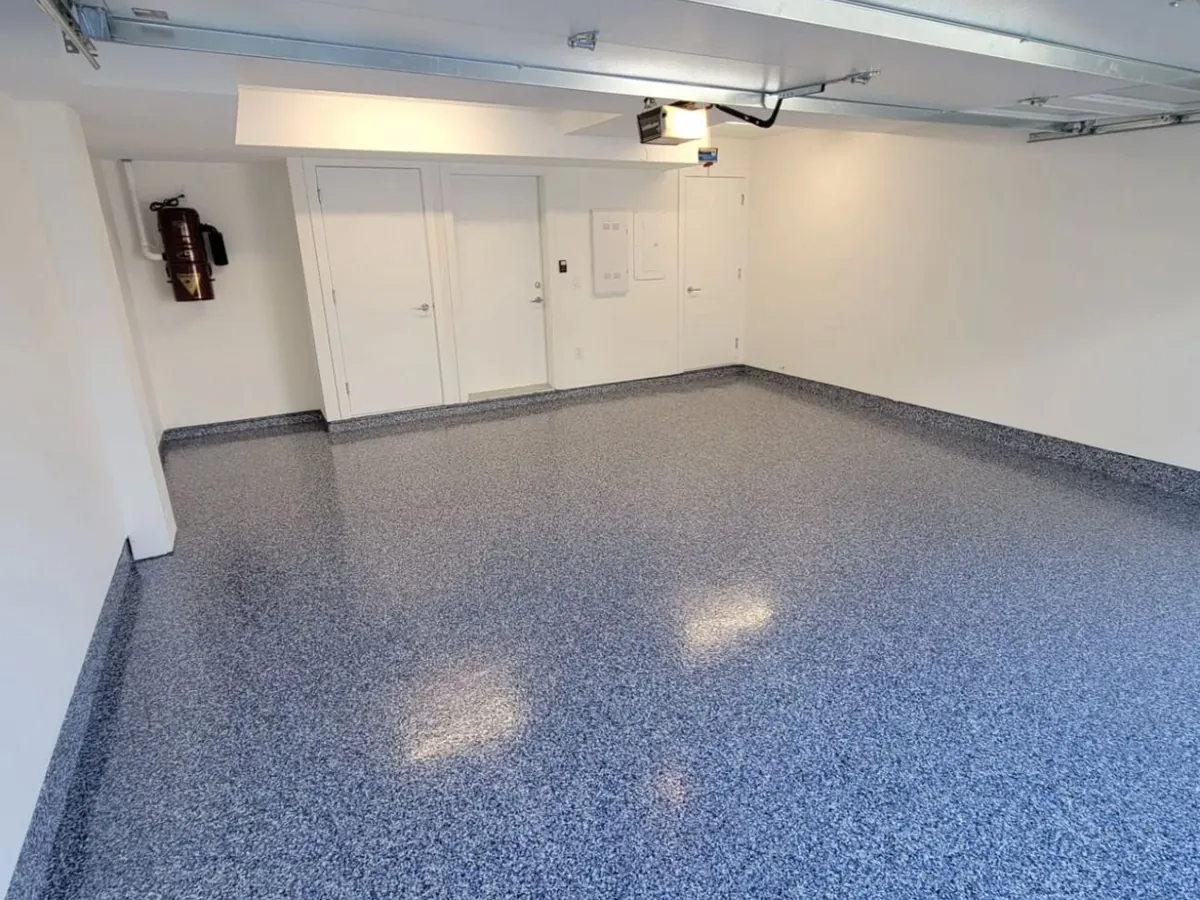
One of the biggest reasons homeowners upgrade their garage floor is maintenance. Bare concrete can absorb stains, collect dust and become increasingly difficult to keep looking clean.
A professionally coated garage floor creates a finished surface that is considerably easier to maintain. For normal maintenance, homeowners can generally use:
- A soft broom or dust mop
- A microfiber mop
- Water
- A mild cleaning solution when needed
Avoid using overly aggressive chemicals unless they are compatible with your coating system.
5. Cost
Epoxy-based systems are generally the more economical option. A full polyaspartic system typically costs more because the coating materials themselves are more expensive and offer additional performance characteristics.
At Epoxy Dog, we offer both options because not every homeowner needs the same system.
Standard
Standard Full-Flake System
- Epoxy base
- Full broadcast flakes
- Polyaspartic topcoat
A strong option for residential garages where homeowners want excellent appearance, durability and value.
15-year warranty · 1–2 day installation
Premium
Premium Full-Flake System
- Moisture barrier + polyaspartic base
- Full broadcast flakes
- Premium polyaspartic topcoat
Designed for homeowners looking for upgraded performance, UV resistance and long-term durability.
Lifetime warranty · 1-day installation
Which Garage Floor Coating Is Better for South Florida?
There isn’t one answer that works for every property.
For many South Florida garages, an epoxy base with a polyaspartic topcoat provides an excellent combination of performance and value. A full polyaspartic system can make more sense when the floor experiences significant UV exposure or when the homeowner wants a premium coating system.
The condition of the concrete also matters. Cracks, moisture, existing coatings and surface damage may require additional preparation before either system can be installed correctly. That’s why Epoxy Dog evaluates the concrete before recommending one of our Standard and Premium coating systems.
Don’t Choose a Garage Floor Based Only on Price
When comparing garage floor coating estimates, ask each contractor exactly what is included:
- How will the concrete be prepared?
- Will the floor be mechanically ground?
- How are cracks repaired?
- What material is used for the base coat?
- What material is used for the topcoat?
- Is it a full-flake broadcast?
- Is existing coating removal included?
- What warranty is provided?
Two companies may both advertise an “epoxy floor” while actually installing very different systems.
Professional Garage Floor Coatings in South Florida
Epoxy Dog specializes in professional epoxy and polyaspartic South Florida concrete coatings for:
- Garages
- Driveways
- Pool decks
- Patios
- Commercial concrete floors
We serve homeowners throughout Boca Raton, Parkland, Coral Springs, Coconut Creek, Delray Beach and surrounding areas, including garage floor coatings in Boca Raton.
Whether you’re considering our Standard or Premium system, we’ll evaluate your concrete and help you understand which option fits your project.
Ready to Transform Your Garage?
Get a preliminary estimate in seconds or schedule a free on-site estimate with Epoxy Dog.
Frequently Asked Questions About Epoxy & Polyaspartic Garage Floors
Is polyaspartic better than epoxy for garage floors?
Not necessarily for every garage. Polyaspartic provides excellent durability and UV resistance, while an epoxy base with a polyaspartic topcoat can provide a strong combination of performance and value for many residential garages.
Does epoxy turn yellow in Florida?
UV exposure can affect some epoxy products over time. Using an appropriate UV-resistant topcoat helps protect the finished system, which is one reason polyaspartic topcoats are commonly used.
Can polyaspartic be used on driveways and pool decks?
Yes. Polyaspartic coating systems are commonly used for outdoor concrete surfaces such as driveways, patios and pool decks when the system is designed appropriately for those applications.
How long does a garage floor coating last?
Longevity depends on the coating system, concrete condition, preparation, installation quality, exposure and maintenance. Proper surface preparation is critical to long-term performance.
Do you need to grind concrete before applying epoxy?
Professional mechanical preparation is an important part of achieving proper adhesion. At Epoxy Dog, surface preparation is an essential part of the installation process.